
If you drive for Uber or Lyft a few days each week, you may wonder whether renting a car is worth the added expense. Many drivers assume a rental only makes sense for full-time earners, but that assumption does not hold for everyone. A part-time rideshare weekly rental can keep extra mileage off your personal car, shift maintenance to someone else, and give you access to a vehicle that meets platform requirements.
Weekly rentals are designed for exactly this kind of schedule. They create a low-commitment way to earn on gig platforms without buying or leasing a dedicated car.
What Is a Part-Time Rideshare Weekly Rental?
A weekly rideshare rental is a car you rent for seven days at a time so you can earn money on gig platforms such as Uber, Lyft, DoorDash, Instacart, and Amazon Flex. Rental companies that serve rideshare drivers market these plans directly to people who want to drive without putting wear and tear on their own vehicle. Hertz, for example, explains that its rideshare customers can earn with Uber or Lyft without adding wear and tear and extra mileage to their personal car.
Weekly rentals usually include the basics needed to start driving quickly. Some providers bundle insurance, maintenance, and unlimited miles into the rate. Others offer commercial insurance or 24-hour support as part of the package. The idea is to remove the common barriers that stop drivers from earning.
When a Weekly Rental Makes Sense for Part-Time Drivers
No single answer fits every driver, but several situations make a weekly rental the smarter choice.
Your personal car does not qualify for rideshare
Becoming an Uber or Lyft driver does not involve a long list of requirements, but one thing holds many people back: the need for an eligible vehicle. Rental providers solve that problem by offering cars that are pre-approved for the platforms they serve. GonzoCar, for instance, offers Toyota hybrids pre-approved for Uber, Lyft, and DoorDash in Los Angeles.
You want to protect your everyday vehicle
Every work mile adds wear to your car. When maintenance is included in the weekly rental, you avoid paying for oil changes, tire rotations, or unexpected repairs out of pocket. Many rideshare rental programs include basic maintenance during the rental period, which is a meaningful benefit for a part-time driver who still wants a dependable personal car for the rest of the week.
You drive enough hours to cover the weekly rate
A part-time schedule can still be profitable if you focus on busy times of the week. If a couple of shifts cover the rental rate, the remaining earnings are yours to keep. If the weekly rate is higher than what you expect to earn, the rental becomes difficult to justify. Run the numbers before you book.
Your usual car is in the shop or out of service
Part-time drivers sometimes rent while their regular vehicle is being repaired or while they wait for a replacement. A weekly rental keeps income flowing during that gap instead of forcing you to pause driving until your car is ready.

When Your Own Car Is the Better Option
There are also cases where renting does not pay off. If your vehicle already meets the requirements for the platform, gets reasonable fuel economy, and you only drive a handful of hours each week, the rental cost may consume too much of your earnings. Estimate your weekly income from gig work, subtract the weekly rental price and fuel, and compare that with what you would keep while using your own car. The comparison usually makes the right answer clear.
What to Look For in a Part-Time Rideshare Weekly Rental
Part-time drivers should compare more than the weekly price. The details of the agreement determine how much of your earnings stay in your pocket. Useful features to check include:
Clear weekly pricing with no surprise fees at pickup or return
Insurance included in the rate
Maintenance covered during the rental period
Unlimited miles, which many providers include
No long-term contract for drivers with short-term needs
Commercial insurance when available for gig work
Confirmation that the vehicle is approved for the platforms you use
Specialized companies make these details easy to spot. GonzoCar advertises insurance, maintenance, and unlimited miles with its weekly rate, while Swift Ride includes commercial insurance for drivers who use Uber, Lyft, and DoorDash. Transparency is especially important for part-time drivers because every dollar spent on the vehicle comes out of gig earnings.
How Much Does a Weekly Rideshare Rental Cost?
Rates vary widely by location and vehicle type. In Los Angeles, GonzoCar lists Toyota hybrids from $319 per week with insurance and unlimited miles. Its Toyota Prius is priced around $53 per day for drivers who need a shorter term. KINTO Share charges a flat fee of $6.50 per hour plus tax, and its weekly rates start at $240 per week plus tax.
Prices elsewhere depend on the local market. Because rates change and each provider structures its pricing differently, verify the current weekly rate directly with the rental company before committing.
Who Qualifies for a Weekly Rideshare Rental?
Qualification for a part-time rideshare weekly rental is usually straightforward. N&N Smart Rentals in Central Florida requires drivers to be at least 25 years old, hold a valid driver’s license, and maintain an active gig account with proof of recent trips. The online booking process accepts a driver’s license and gig account screenshots.
Some programs are even more automated. Enterprise CarShare grants authorized drivers access to vehicles through a mobile device for hourly, daily, or weekly rental. Specialized rideshare providers often skip credit checks, and qualified drivers may be able to avoid a security deposit.
Weekly Rental vs. Monthly Rental for Part-Time Drivers
Many rideshare rental companies offer both weekly and monthly terms. Weekly agreements fit drivers who want flexibility, while monthly plans suit those with a steadier schedule.
Weekly rental | Monthly rental |
|---|---|
Seven-day commitment that is easy to stop or change | A longer arrangement that supports consistent gig work |
Best for testing rideshare, seasonal surges, or short gaps | Best for drivers who expect steady part-time hours |
Paid week to week | Paid on a monthly cycle |
Part-time drivers often prefer weekly terms for their lower commitment. If the arrangement is not working, the driver is not locked in for a full month.
Part-Time Rideshare Weekly Rental Options in Central Florida
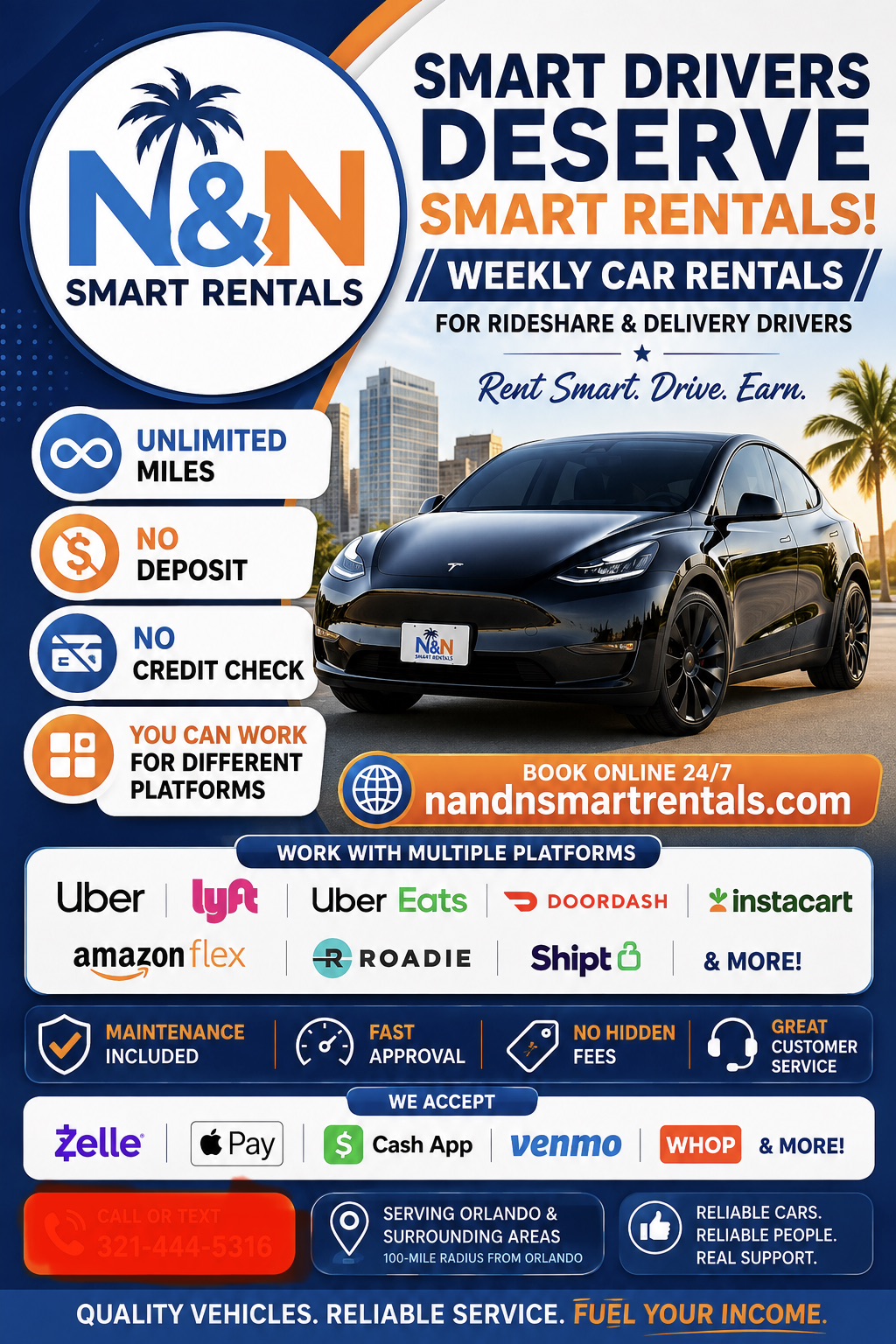
For drivers in Orlando and surrounding areas, N&N Smart Rentals offers weekly and long-term vehicles built specifically for gig workers. The locally owned company focuses on reliable, fuel-efficient sedans, including the 2026 Toyota Corolla SE and 2016 or 2017 Ford Fusion variants. These cars suit Uber, Lyft, Uber Eats, DoorDash, Instacart, Amazon Flex, Spark, Roadie, and similar platforms.
The rental terms are designed around gig work: transparent pricing, unlimited miles, maintenance included, fast application processing, and no credit check. Qualified renters may also be eligible to skip the security deposit. Drivers can request a free quote online and upload their documents during booking.
Frequently Asked Questions
Is a part-time rideshare weekly rental worth the cost?
A weekly rental is worth the cost when you drive enough hours to cover the weekly rate and you want to protect your personal car from added mileage. Part-time drivers who focus on busy shifts can earn enough in a few days to justify the expense. If your own car already qualifies and you drive rarely, keeping your own vehicle is usually the cheaper path. Compare expected earnings with the full weekly cost before booking.
Are insurance and maintenance included in weekly rideshare rentals?
Many specialized rideshare rental companies include both. GonzoCar includes insurance, maintenance, and unlimited miles in its weekly rate. Swift Ride includes commercial insurance for gig drivers. Hertz covers basic maintenance throughout the rental period. Coverage varies by provider, so confirm exactly what is included before you sign.
What do I need to qualify for a weekly rideshare rental?
Requirements depend on the provider. N&N Smart Rentals expects drivers to be at least 25 years old, present a valid driver’s license, and show an active gig account with proof of recent trips. Other programs, such as Enterprise CarShare, grant access through a mobile app for authorized users. Check with the rental company about its specific documents and conditions.
How much does a part-time rideshare weekly rental cost?
Pricing depends on your city and the vehicle you choose. GonzoCar in Los Angeles advertises Toyota hybrids from $319 per week, and KINTO Share lists weekly rates from $240 per week plus tax. Some providers offer daily pricing for drivers who only need a car for a few shifts. Always ask for current local pricing before reserving.
Can I rent a car for rideshare if I only drive part time?
Yes. Rental companies openly serve part-time drivers. One Phoenix-based provider notes that whether you drive full time or part time, there is a solution available, and it offers daily, weekly, and monthly terms. Weekly rentals are a natural match for part-time schedules because they give you an eligible car without requiring a long-term commitment.